ScRNA-Seq Primer
6-Week Cohort-Based Course
Next Cohort: 1/10 - 2/21, 2026
$960 USD
7 people enrolled
Crack open any scRNA-seq dataset with this guided, hands-on experience.
Since being crowned Nature’s Method of the Year in 2013, single-cell RNA-seq (scRNA-seq) has taken the life sciences by storm. Yet first-time analysts continue to be discouraged by the complex analysis and interpretation of this data.
This primer prepares you to handle that complexity. It teaches biologists like yourself how to crack open any scRNA-seq dataset and make defensible observations that move your research forward.
I have distilled the my most useful advice into 6 weeks of content. Through rigorous exercises, you will absorb the core lessons I have learned from over 7 years of handling this data. By the end of this course, you might just be the go-to scRNA-seq person on your team.
"I gained additional exposure to scRNA-seq data analysis in one of Dean’s guided experiences and learned how to analyze single-cell data in Python. I later implemented what I learned in a project during a remote internship that I did under the supervision of a university PI, which eventually helped me get an offer for a PhD position."
Yalda Y., PhD Student at University of Geneva
What you'll learn
- How to deal with common issues when preparing scRNA-seq data for analysis
- Data QC
- Data normalization
- Data integration
- Clustering analysis
- Cell type annotation
- Differential expression analysis
- Data visualization
- Why scRNA-seq data analysis tends to be iterative
- How to verify the claims of a modern computational biology paper
- Coding best practices


What you'll get
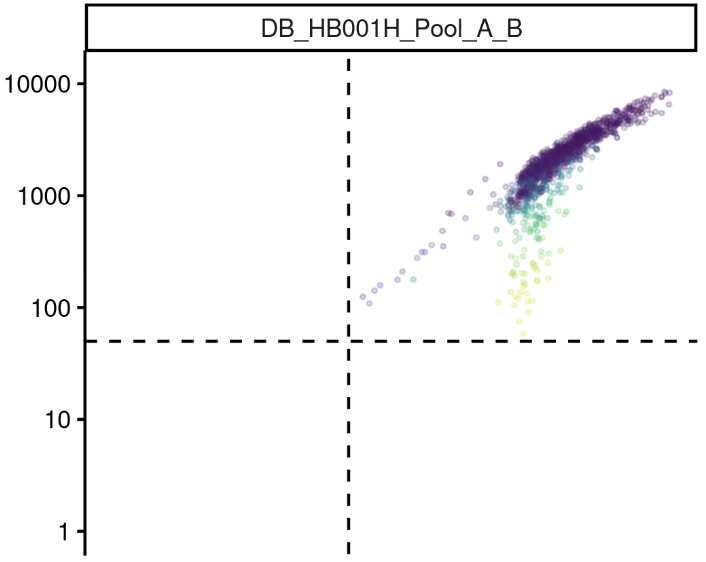
- 6 R notebooks of content with 3800+ lines of code, instructions, and exercises (see screenshot below)
- Answer keys to every exercise
- A coding environment in the cloud that requires zero troubleshooting. It just runs.
- Demonstration of your skills through an independent scRNA-seq analysis on par with a recently published biology paper.

How you'll grow professionally
- No longer rely on others for scRNA-seq data analysis
- Know how to strengthen scientific decisions in your research with scRNA-seq data
- Add an in-demand computational skill to your resume
- Become more competitive for grad schools, jobs, or promotions
Who this course is for
Biologists working in academia or industry - staff scientists, postdocs, research assistants, etc. - who want to demonstrate growth in computational skills and extend impact at work
Students in a life science PhD program who want to strengthen their thesis with a computational component and be more competitive for jobs after graduation
Students in a life science bachelor’s or master’s program who want be more competitive for research lab positions, grad schools, or jobs after graduation
Course details
Prerequisites
- At least one year of university-level biology
- Familiarity with RStudio
- Familiarity with data manipulation using base R and/or tidyverse
- Familiarity with creating plots using ggplot2
- Familiarity with ChatGPT
Time commitment
- 8-16 hours per week, depends on how comfortable you are with R programming to begin with
Course schedule
- Orientation (1/10)
- Week 1: Data Cleaning (1/11 - 1/17)
- Week 2: Data QC (1/18 - 1/24)
- Week 3: Data Integration, Clustering (1/25 - 1/31)
- Week 4: Cell Type Annotation (2/1 - 2/7)
- Week 5: Differential Expression Analysis (2/8 - 2/14)
- Week 6: Independent Project (2/15 - 2/21)
Weekly course format
- You will work through one R notebook each week. All of the instructions along with exercises are presented in these notebooks directly.
- A recorded code walk-through for each week's R notebook helps you get started.
- An additional mid-week office hour helps you get unstuck.
- An online community created for each cohort helps students connect with one another throughout the week.
- Students answer a reflection question or share their analysis at the end of each week with the community as an accountability measure.
Special features
Code walk-throughs: Weekly code walk-through to help you hit the ground running
Office hours: Weekly office hour to keep you on track
Community of peers: Stay accountable and share insights with like-minded professionals in a designated online community
Asynchronous delivery: Course is designed to fit into busy people's lives
Lifetime access: Revisit course content and R notebooks whenever you need to, even after the course officially ends
Refund guarantee: Students can request a full refund at any time up to the midpoint of the course, no questions asked

Meet the instructor
Dean started his graduate training at Harvard and is currently a principal scientist in computational biology at Novartis. He has 8 years of experience as a computational biologist, spanning both academia and industry. Dean made the transition from 100% wet-lab to 100% dry-lab work, so he knows firsthand the many obstacles that prevent biologists from quickly learning computational skills.
Dean has 47,000+ followers on LinkedIn, 27,000+ subscribers to his LinkedIn newsletter, and 3,000+ downloads of his free course, Bare Minimum R. A primary focus of his LinkedIn content is how biologists can accelerate their learning of computational skills to adapt to a data-dominant future.
Dean has served on industry panels for Harvard, MIT, Carnegie Mellon, Columbia, UNC Chapel Hill, and CSU Long Beach career events. Dean was also an invited speaker, for both professional development and scientific talks, to the Festival of Genomics & Biodata.